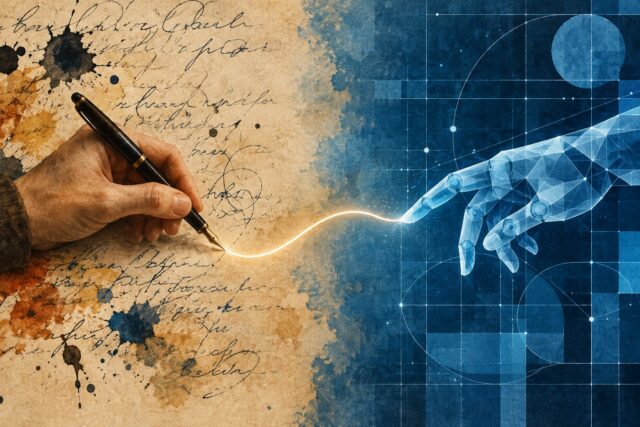
I came across an interesting article in Science about a researcher whose colleague disliked his AI-polished emails so much that he set a trap to detect AI involvement. Apparently, he preferred communicating with a real person, imperfections and all.
It got me thinking.
For years, we have been encouraged to write properly, avoid spelling mistakes and use good grammar. Now AI can do all that effortlessly. Suddenly, typos, awkward sentences and bad grammar seem almost precious. They give our writing a human touch.
But here is the irony. AI can fake all those imperfections too. Just ask it to write like you, including your mistakes!
So what actually makes writing human?
I use AI regularly, including to help me write. I have one simple rule. If I don’t enjoy reading the article myself, from beginning to end, then it is a bad output. No matter how polished the language or how impressive the structure.
Sometimes AI produces long, beautifully written articles that say very little. Repetitive arguments, unnecessary explanations and predictable conclusions. Everything is grammatically correct, yet somehow boring. I wouldn’t want to read them myself, let alone expect others to.
To me, AI should help express my thoughts, not manufacture them. I must still recognise my own voice, agree with the arguments and enjoy the experience of reading what I supposedly wrote.
Perhaps this is how we should learn to live with AI. Stop worrying so much about whether a sentence looks human or machine-generated. Instead, ask whether there is genuine thinking behind it.
We don’t need to deliberately make mistakes to prove we are human. Nor should we reject AI simply to preserve some romantic notion of authenticity.
The real danger is not that AI will learn to write like us. It is that we may eventually stop thinking for ourselves.
And if I cannot even enjoy reading my own AI-assisted article, perhaps that is the first sign that something has gone wrong.