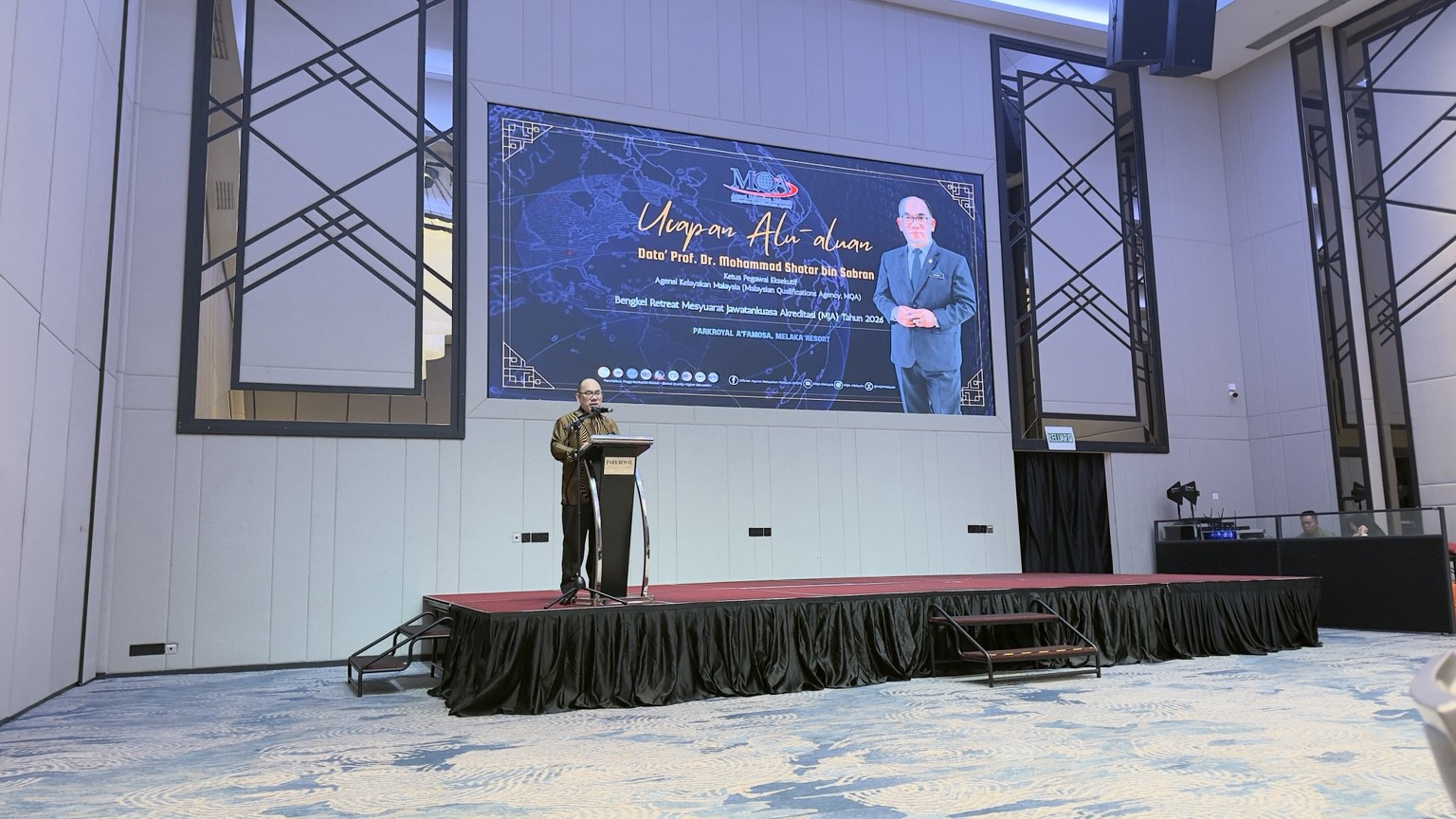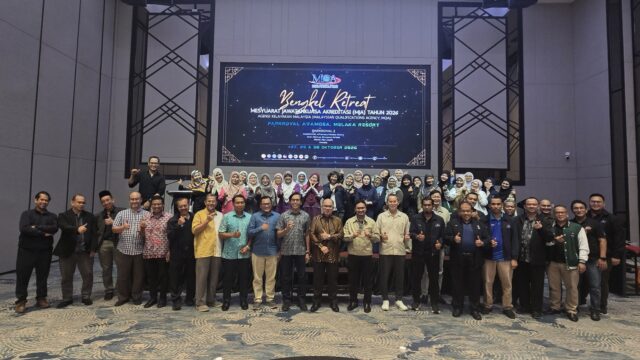
For many years, I looked at accreditation mainly as a compliance exercise.
There are standards to meet, documents to prepare, evidence to provide and numbers to satisfy. When an accreditation exercise comes, everyone becomes busy. Understandably, it can feel like another administrative burden imposed on an academic programme.
My experience with the Jawatankuasa Akreditasi (MJA), and especially the discussions with more experienced members during the 2026 MJA retreat, has gradually changed that view.
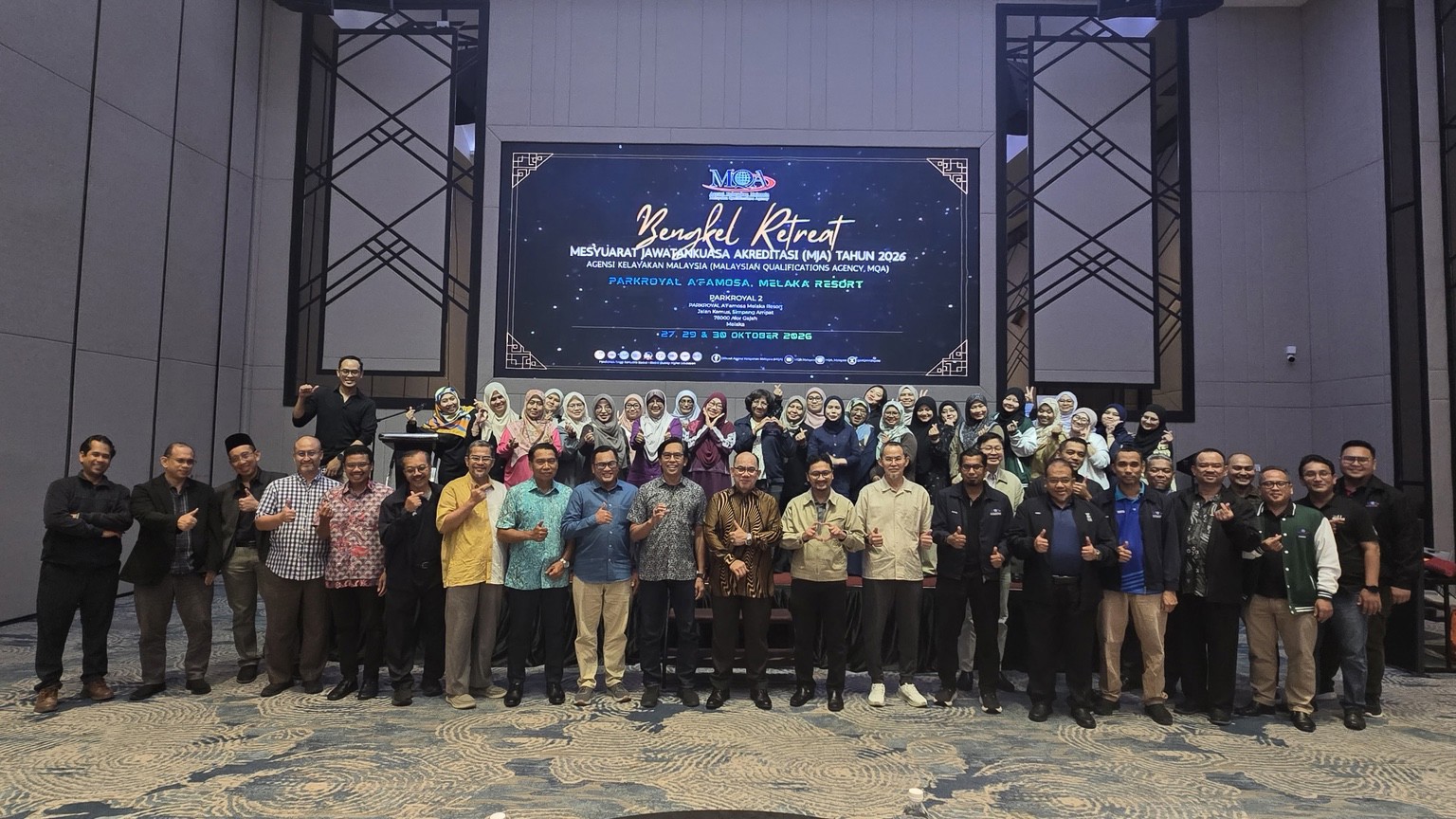
I began to appreciate that accreditation is not really about complying with a list of requirements. At its heart, it is about quality.
And quality asks a different question.
Not simply, “Have we met the standard?”
But, “Are we achieving what we intended to achieve?”
The standard is not the destination
Every academic programme has an intention. We want our graduates to possess certain knowledge, competencies, values and professional attributes. The curriculum, teaching, assessment, academic staff and learning environment are all means towards achieving those outcomes.
Quality assurance should therefore help us determine whether these things are actually working.
A minimum standard is necessary. Without a common baseline, it would be difficult to protect students and society from programmes that do not provide an acceptable level of education.
But meeting the minimum standard should never become the ultimate objective.
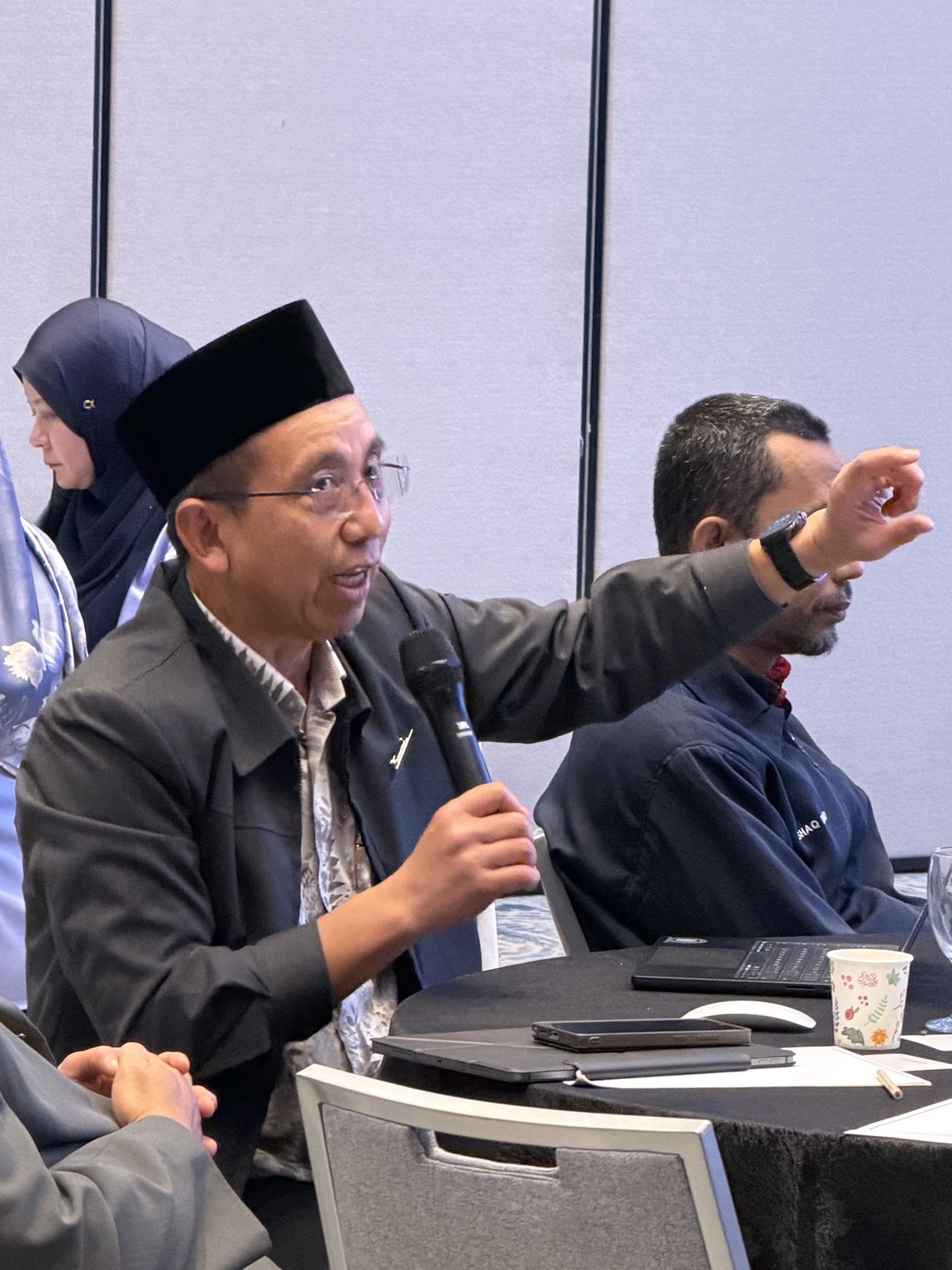
During one of my conversations with Prof Iqbal, he raised an interesting concern about self-accreditation. It made me reflect on what institutional autonomy in quality assurance is really supposed to mean.
A university with greater autonomy should not use that freedom merely to maintain the minimum requirements more conveniently. The opportunity is much bigger than that.
Self-accreditation should give a mature university greater flexibility and responsibility to develop its own quality system, one that allows it to go beyond the minimum standards and pursue the quality appropriate to its own aspirations.
From compliance to purpose
This changes the way we should look at standards.
Instead of asking, “What is the minimum number required?”, perhaps we should first ask, “What are we trying to achieve?”
And then: “What level of resources, academic staff, curriculum, assessment and learning environment do we need to achieve it?”
The answer may sometimes be the minimum prescribed by the standard. But for some programmes and some universities, it should be considerably higher.
This is particularly important when we think about a university’s vision and mission.
If a university claims that it wants to produce a particular kind of graduate, become internationally recognised, lead a particular field, integrate certain values into education, or make a distinctive contribution to society, its quality assurance system should help it achieve those ambitions.
Otherwise, accreditation becomes disconnected from the university’s purpose. We may be fully compliant, yet still fall short of what we ourselves claim we want to become.
Quality is not a number
Another lesson I am learning from MJA is that quality cannot always be reduced to individual numbers.
Numbers are important. Standards and benchmarks are important. But they need to be understood within their purpose and context.
A student-staff ratio, number of academic staff, percentage of particular qualifications or amount of learning time tells us something. None of these numbers, by itself, tells us whether a programme is good.
The more important question is what the requirement is trying to protect or achieve.
That requires judgement. It also means looking at a programme as a whole rather than treating accreditation as a checklist in which every box carries an independent meaning.

The process can still be better
My greater appreciation of accreditation does not mean that I think the process is already ideal.
My main concern remains the documentation burden. Accreditation requires evidence, as it should. But preparing, compiling, organising and presenting that evidence can become very labour intensive. Considerable academic time may be spent demonstrating that something has been done rather than actually doing it, evaluating it and improving it.
Evidence must remain. Rigour must remain. But more documentation does not necessarily mean better quality assurance. We should keep asking what evidence is genuinely necessary, remove duplication and make better use of information that universities already collect through their normal academic processes.
In this respect, I appreciate the use of structured evaluation tools. MQA already uses the Rubrik 3C as an evaluation tool for its Panels of Assessors (POA). Professional bodies may similarly have their own versions of structured evaluation tools. In medical education, for example, the Malaysian Medical Council (MMC) uses its own accreditation instruments.
I think this is the right direction. A well-designed rubric can help assessors exercise professional judgement in a more structured and consistent manner. More importantly, it can shift attention from merely establishing whether a document exists towards evaluating what the evidence actually means.
Perhaps the direction should increasingly be from:
“Do you have the document?”
towards:
“What does the evidence tell us about the quality of the programme?”
I would like to see this approach developed further, together with a serious review of the documentation burden placed on HEPs. Accreditation must remain evidence-based, but producing and organising that evidence should not become an industry of its own.
And now we have AI
Artificial intelligence gives us another opportunity to improve the process, but it also introduces a new risk.
Used properly, AI should make quality assurance more efficient. Much of the information needed for accreditation already exists within university systems. We should evaluate how AI can help organise and retrieve evidence, cross-reference information, identify gaps and reduce repetitive manual work.
But LLMs also make it extremely easy to generate pages of polished descriptive text. There is a real danger that HEPs may use them to produce increasingly long accreditation narratives simply because the technology makes this easy.
That would not necessarily improve quality assurance. A long, impressive-sounding statement is not evidence of quality. Worse, lengthy AI-generated narratives without substantive meaning may make evaluation harder by burying the important evidence beneath unnecessary words.
Perhaps accreditation in the AI era should require us to write less, not more.
Tell us clearly what you intended to achieve. Show the relevant evidence. Demonstrate whether you achieved it. Identify the important gaps and explain what you are doing about them.
AI should help us find and understand the evidence. It should not manufacture the appearance of quality.
From compliance to improvement
I now see accreditation somewhat differently.
It should not be something that we prepare for every few years and then forget once the certificate is obtained. Neither should quality assurance be primarily about satisfying MQA.
It should be something we do for ourselves.
A good quality assurance system should continuously tell us whether our programmes are doing what we designed them to do, where they are falling short, and what we can do better.
For institutions entrusted with self-accreditation, that responsibility becomes even greater. Autonomy should not mean that external scrutiny has simply become easier. It should mean that the institution has demonstrated the maturity to scrutinise itself and to demand more of itself.
The minimum standard remains important.
But it is the floor, not the ceiling.
At the same time, the quality assurance process itself should practise continuous quality improvement. The challenge is not to make accreditation less rigorous. It is to make it more intelligent, more evidence-focused and less labour intensive.
Perhaps that is the biggest change in my understanding of accreditation. The question is no longer simply whether we have complied with the standards.
The more meaningful questions are:
Are our programmes achieving what we intended them to achieve?
Are our quality processes helping us improve?
Are we using quality assurance to become the university we say we want to be?
I am still learning about accreditation and quality assurance. There is much more for me to understand.
But increasingly, I believe we should spend less time producing documents for accreditation, and more time using evidence to improve education.